
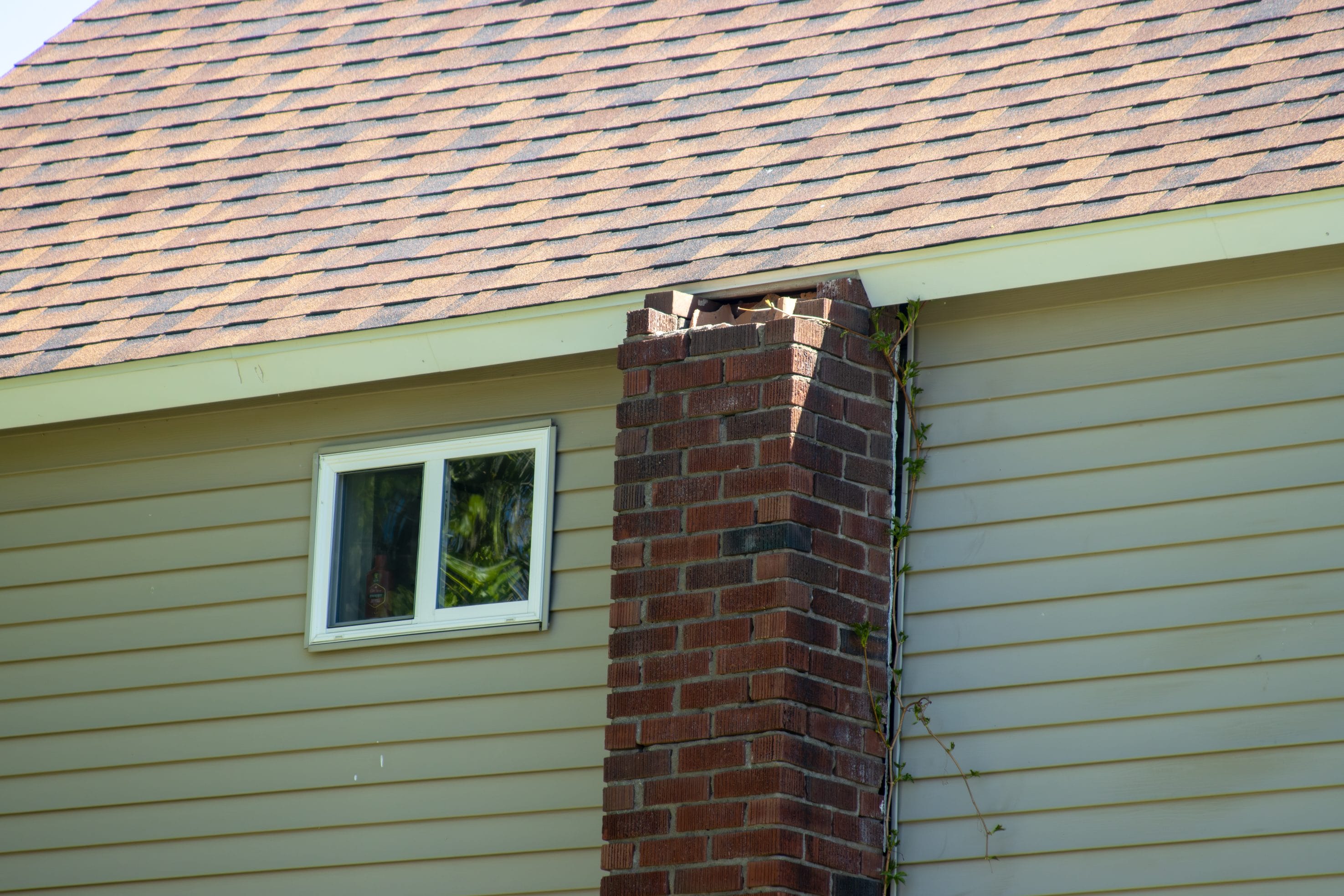
For homeowners across Cedarburg, Mequon, and the greater Milwaukee area, chimney damage doesn’t always announce itself with dramatic cracks or crumbling bricks. Often, the signs are subtle until they’re not. Understanding the difference between a chimney repair and a full chimney rebuild can save you from costly emergencies and protect your home’s structural integrity. The good news? Most warning signs are easy to spot once you know where to look.
Can a Chimney Collapse?
Chimneys are built to last for decades, but they aren’t indestructible. Wisconsin’s freeze-thaw cycles, heavy snow loads, and seasonal storms put constant stress on masonry structures. Without regular maintenance, that wear and tear can escalate to the point of structural failure. Here are the most common factors that can lead to a chimney collapse:
- Water infiltration and freeze-thaw damage. When moisture seeps into mortar joints and bricks, it expands during freezing temperatures and contracts during thaws. Over repeated Wisconsin winters, this cycle breaks down the masonry from the inside out, weakening the entire structure.
- Deteriorated or missing mortar joints. Mortar is the binding agent that holds your chimney together. When it crumbles, erodes, or falls out entirely, bricks lose their support and the chimney becomes structurally compromised.
- Foundation settling or shifting. Homes throughout Ozaukee and Washington counties sit on varying soil types. If the ground beneath your chimney shifts or settles unevenly, the chimney can lose its footing and become unstable over time.
- Lack of a chimney cap or crown damage. A damaged or missing crown allows water to pour directly into the chimney’s core. This accelerates interior deterioration that may not be visible from the outside until significant damage has already occurred.
- Age and deferred maintenance. A chimney that hasn’t been inspected or serviced in years is far more vulnerable. Small issues compound over time, and what could have been a straightforward chimney repair often becomes a full chimney rebuild.
What Does a Leaning or Tilting Chimney Mean?
A chimney that leans even slightly is telling you something important about what’s happening below the surface. In most cases, tilting points to a foundation issue, either because the footing beneath the chimney was undersized when originally built or because years of soil movement have caused it to shift.
Homeowners in areas like Waukesha and Milwaukee may notice this more frequently in older homes where construction standards were different. The lean may seem minor at first, but it tends to worsen over time, especially through harsh weather seasons.
A tilting chimney isn’t just a cosmetic concern. As the structure pulls away from its intended position, it creates gaps where moisture enters, damages flashing, and compromises the seal between the chimney and your roofline. At a certain point, chimney repair alone won’t correct the underlying problem.
If you’ve spotted a visible lean, it’s worth having a certified technician evaluate whether the chimney can be stabilized or whether a chimney rebuild is the more reliable long-term solution.
Why Is My Chimney Pulling Away from the House?
When a chimney visibly separates from the exterior wall of your home, it typically signals a structural disconnect between the chimney and the house framing. This separation often starts small, appearing as a hairline gap near the roofline, and gradually widens as the chimney settles independently from the rest of the structure.
In many homes across Cedarburg and the surrounding communities, this issue stems from an inadequate foundation or deteriorating ties between the chimney and the house. Seasonal ground movement in Eastern Wisconsin can accelerate the problem, particularly in properties built on clay-heavy soils.
The gap created by this separation invites water behind your siding and into your walls, which can lead to interior damage, mold, and rot. Flashing failures often accompany this type of movement as well.
Addressing a chimney pulling away from the house usually goes beyond a surface-level chimney repair. A professional assessment will determine whether reinforcement is possible or whether a chimney rebuild from the foundation up is the appropriate path forward.
What Are the Signs of a Chimney About to Fall?
Recognizing the warning signs before a chimney fails is critical for protecting your home and your family. Some indicators are visible from the ground, while others require a closer inspection. If you notice any of the following, it’s time to act quickly:
- Large or spreading cracks in the masonry. Cracks that run vertically through multiple bricks or along mortar lines suggest the structure is under stress and losing its ability to hold together.
- Significant lean or tilt. Any noticeable deviation from vertical alignment is a red flag. A chimney that has shifted several degrees is at elevated risk of partial or full collapse.
- Loose or falling bricks. Finding brick fragments on your roof, in your gutters, or on the ground near your home means the masonry is actively breaking down. This is one of the most urgent signs that a chimney rebuild may be necessary.
- Crumbling mortar that can be scraped out by hand. If you can remove mortar with your fingers or a household tool, the joints have lost their structural integrity and the chimney is no longer properly supported.
- Interior signs like water stains, drafting issues, or cracked flue tiles. Damage isn’t always visible from outside. Water stains on ceilings near the chimney, unusual drafts, or damaged flue liners can all point to serious internal deterioration.
How Do I Know If My Chimney Needs to Be Rebuilt Instead of Repaired?
The line between chimney repair and chimney rebuild depends on the extent and location of the damage. A repair typically addresses surface-level problems such as repointing mortar, replacing a few bricks, or fixing a damaged crown. A rebuild becomes the right call when the damage affects the chimney’s structural core. Here’s how to tell the difference:
- Damage extends below the roofline. When deterioration reaches the chimney’s lower sections or its foundation, patching the top won’t solve the problem. A chimney rebuild from the base may be required to restore full structural soundness.
- Multiple types of damage are present simultaneously. A chimney showing cracks, leaning, moisture intrusion, and mortar loss all at once has likely passed the point where individual repairs are effective.
- Previous repairs haven’t held. If you’ve already invested in chimney repair work that failed or deteriorated again quickly, the underlying structure may be too compromised to support patchwork fixes.
- The chimney is more than 50 years old with no major restoration. Older chimneys in Milwaukee-area homes may have been built with materials and methods that don’t meet current standards. A chimney rebuild brings the structure up to code and extends its lifespan for decades.
- A professional inspection confirms structural failure. A certified technician can assess damage that isn’t visible to the untrained eye. If the inspection reveals foundational shifting, internal collapse, or widespread masonry failure, a rebuild is the clear recommendation.
Protect Your Home with the Right Decision
Whether your chimney needs a targeted repair or a complete chimney rebuild, the worst approach is to wait. Homeowners in Cedarburg, Mequon, Milwaukee, and across Eastern Wisconsin can count on Chimney Concepts for honest, transparent evaluations backed by over 25 years of local experience. Reach out to schedule an inspection today and get a clear answer on what your chimney actually needs.